What is the Khojaly Massacre?
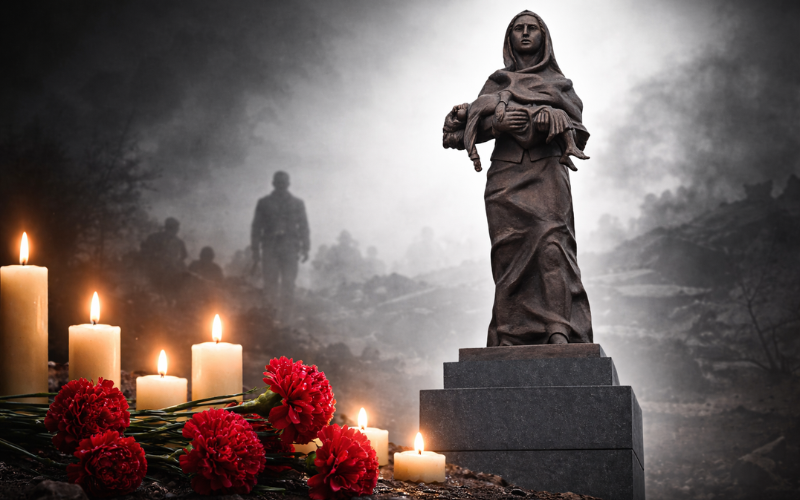
The Khojaly Massacre is one of the most tragic and severe events that occurred during the Nagorno-Karabakh conflict on the night of February 25–26, 1992. During this incident, hundreds of civilians were killed, thousands were injured, and many were taken hostage. The Khojaly Massacre left a deep mark on the history of Azerbaijan and became one of the most painful pages of national memory.
Causes of the Event
Military and Political Context
In the early 1990s, the Armenia–Azerbaijan conflict escalated into a more intense phase. The city of Khojaly was strategically important. Its airport was of particular significance for the region. In February 1992, the city was surrounded, and the civilian population was left in a desperate situation.
The Attack and Its Consequences
According to official data, more than 600 people lost their lives as a result of the attack. Among them were women, children, and the elderly. Entire families were destroyed, children lost their parents, and hundreds of people were taken hostage.
International Law and the Khojaly Massacre
The Khojaly Massacre is assessed as a serious violation of international humanitarian law. A number of countries and international organizations have recognized this event as genocide or a mass killing. Various campaigns have been carried out to achieve international recognition of the tragedy.
Commemoration Day of the Khojaly Massacre
Every year on February 26, Azerbaijan commemorates the victims of the Khojaly Massacre. Various events, marches, and awareness campaigns are organized both domestically and abroad. The purpose is to honor the memory of the victims and to inform the international community about the historical truth.
Historical Memory and Future Generations
The Khojaly Massacre is not only a tragic event of the past but also a lesson for future generations. Preserving historical facts, conveying them accurately, and ensuring legal evaluation play an important role in shaping national memory.